
Description
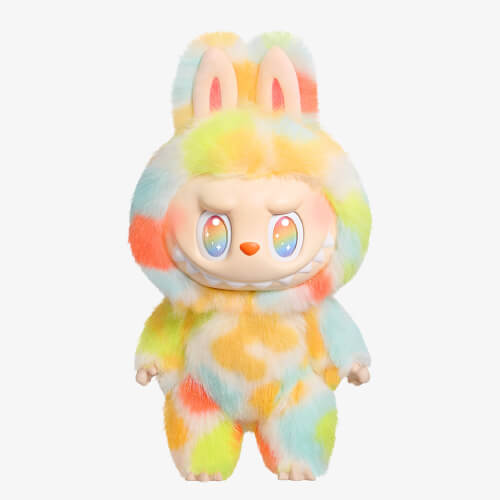
The Labubu Big into Energy Series – Rock The Universe Vinyl Plush Doll is a high-quality designer collectible released as part of POP MART’s The Monsters line. This model mixes artistic vinyl sculpting with soft plush materials, making a unique figure that attracts both art-toy fans and plush lovers. It is made to be a statement display item instead of a regular blind-box model.
Product Overview
Rock The Universe shows the lively and outgoing style of the Big into Energy Series, which is a special group known for its bright colors, themes that look like movement, and characters that are full of energy and action. This vinyl plush doll is made in a bigger size compared to smaller figures, which makes it stand out more on shelves, desks, and collector’s cabinets.
Materials and Construction
The figure typically features:
Vinyl or PVC face and head that offer clear, detailed sculpting and a shiny, smooth surface.
Soft plush body made from polyester fibers for a different texture feel.
ABS and internal support materials are used to keep the structure stable and strong.
PP cotton or particle filling is used to keep the shape and provide a balanced weight.
This mix lets the product work as both a nice-looking artwork and a soft, touchable item.
Design Characteristics
Rock The Universe has a style that is inspired by space and music. The character usually has bright color transitions, lively face expressions, and symbols like heart necklaces or shiny details. The style highlights movement, imagination, and a sense of youthful rebellion, which matches the overall theme of the Big into Energy series.
Because of special dyeing or finishing methods, small color differences may happen between items, which makes each one feel more unique to collectors.
Size and Display Value
This vinyl plush doll is much bigger than regular blind-box figures, making it good for:
A key display piece in designer toy sets.
A decorative art piece for modern interiors
A special item for fans of POP MART or Labubu.
A collector’s display item because of its presence and size.
The bigger size makes the product seem more valuable and easier to notice on the shelf.
Collector Appeal
Rock The Universe is more than just a toy; it is presented as a designer collectible. Key reasons collectors value this model include:
Hybrid vinyl-plush craftsmanship
Recognisable character branding
Series continuity within The Monsters line
Limited availability depending on distribution cycles
Strong resale and secondary market interest
Authenticity is usually checked by looking at the official packaging, brand logos, QR codes, and special marks from POP MART. Fake copies are available in the market, so it’s better to buy from reliable sellers.
Summary
The Labubu Big into Energy Series – Rock The Universe Vinyl Plush Doll is a standout high-impact designer collectible that combines sculptural vinyl detail with soft plush texture. Its lively design, high-quality materials, and bigger screen size make it both a piece of art and a collectible item. For both collectors and retailers, it’s one of the more visually striking pieces in the Big into Energy series.
Rock The Universe – The Birth of a Cosmic Icon.
Long before collectors put the Rock The Universe figure on bright shelves and glass displays, before it became a main feature in rooms all over the world, before its name was talked about in online groups and creative spaces, it started as a quiet sound — a movement in a part of space where sound couldn’t be heard and light had no color.
In the farthest part of the imagined universe, beyond the stars that astronomers have recorded and beyond the stories passed down by ancient myths, there was a place known only as The Quiet Field. It wasn’t empty; it was just waiting. Waiting for movement, for emotion, for identity. The Quiet Field was like a blank canvas with no colors, a stage with no performers, and a story with no words.
And then, one cycle, something changed.
A pulse appeared.
Not a flash, not an explosion — a rhythm. A deep, resonating beat that didn’t shake things but stirred the possibility itself. The pulse started slow, then added more layers, and soon there were many more, until the whole Field started to hum. The hum evolved into tones. The tones became patterns. The patterns became colour.
From these colors came pieces of shape — curved edges, rounded ears, and expressive eyes. Not quite a living being, but the plan for a personality. The universe wasn’t making a weapon, or a ruler, or a protector. It was creating Energy with Form.
The Architects of Expression
In the Quiet Field lived beings called the Architects of Expression. They were not gods, nor spirits, nor machines. They were ideas given awareness. Their goal was clear: to watch for possible things and create something meaningful from them. They didn’t create worlds; they made symbols. They didn’t lead armies; they motivated movements.
When the pulse started, the Architects came together around the shape that was forming. They looked at the colors moving around its shape — bright blues that showed curiosity, dark purples that felt mysterious, bold reds that showed confidence, and quick flashes of white that suggested innocence. Every color stood for a quality, and every quality held a tale ready to be told.
“What is it becoming?” asked one Architect.
“Not what,” replied another. “Who.”
The distinction mattered. A what could be controlled. A person who could change the universe just by being there.
The Architects gave the developing shape three main essences:
Resonance is the ability to affect someone’s feelings without using pressure or control.
Presence is the ability to be seen and felt without trying to grab attention.
Play – the reminder that making things is not only about being serious; it’s also about having fun.
These essences did not make the figure powerful. They made it unforgettable.
The Vinyl Star and the Plush Core
As the shape became firm, two materials appeared — not as actual things, but as qualities of the mind.
The outer shell turned into Vinyl Star, a cosmic surface that reflected light clearly and exactly. Vinyl Star symbolised definition, identity, and permanence. It made sure the figure would always be easy to recognize, even as styles changed and times moved forward.
Inside it was the Plush Core, a gentle gravity that took away roughness and turned it into something cozy. The Plush Core stood for empathy, warmth, and being easy to reach out to. It let the figure communicate with beings from different cultures and worlds.
The Architects understood balance. Too much Vinyl Star would create rigidity. Too much Plush Core would dissolve structure. They created harmony — a being that was strong but still easy to connect with.
This duality would later explain why Rock The Universe was not just a simple object or a regular character. It was both a work of art and a friend, a symbol and a source of comfort.
The Name That Shaped Reality
Names hold power in every dimension. To name something helps you remember it better. The architects talked a lot, because they understood that choosing the wrong name could stop things from reaching their full possibility.
Finally, one Architect noticed the pulse that started everything — still softly ringing through the Field. It was rhythmic, musical, defiant, alive.
“It doesn’t conquer,” the Architect said. “It rocks.”
Another Architect added, “And it doesn’t stay small.” It expands. It reaches beyond.”
So, the name came not as an order, but as a way to describe what happened.
Rock The Universe.
The name did not suggest destruction or control. It promised impact. It promised movement. It said that in any place it showed up, things would stop being the same.
The Rise of Symbolic Dominance
Dominance in this universe wasn’t gained by using big armies or strong buildings. Real power came from cultural influence — the power to grab attention, make others copy, and shape how people see themselves. Rock The Universe possessed this naturally.
When it entered the world of imagination, creators saw their ideas speeding up. When it appeared in dreams, colours intensified. When people saw, carved, or showed the artwork, they felt a strong sense of creative freedom — a quiet push to be brave, expressive, and full of color without any shame.
Other symbols tried to compete, but they used fear or were too hard to understand. Rock The Universe depended on clear messages and strong energy. It did not overshadow; it illuminated. It did not silence; it amplified.
This was intergalactic dominance redefined. Not taking over land, but taking over people’s focus. Don’t rule over people’s bodies, but instead influence their minds and hearts.
The Collector Constellations
As Rock The Universe traveled through imaginative worlds, constellations started appearing — not made of stars, but of fans. Every fan brought their own view, and every view made the story richer. Some saw rebellion. Others saw optimism. Some saw nostalgia. Others saw the future.
The figure turned into a mirror instead of giving instructions. Its power grew because it let people be themselves instead of making them all the same. Every shelf it took up turned into a small world where creativity moved around it.
The Eternal Pulse
Even after time changed and new signs came into being, the first beat from the Quiet Field never stopped. It no longer needed to be loud. It had already achieved permanence. The pulse became a part of the culture’s everyday beat — a constant sign that expressing yourself is powerful, playing is strong, and being yourself can be both brave and gentle.
Rock The Universe did not end wars or control galaxies. It did something quieter and longer-lasting: it made many beings remember that imagination is a type of power that no empire can stop.
And in that reminder, it reached the top level of influence across galaxies — not by controlling, but by inspiring in a way that couldn’t be stopped.
Rock The Universe – Volume II
The Era of Resonant Peace
A thousand cycles after the first pulse that shaped Rock The Universe, the galaxies no longer shook with doubt. The era of restless expansion had quieted. Civilizations that used to think greatness was about how far they could go and how fast they could move started thinking about it in terms of harmony and how things could last over time. The universe, huge and full of different parts, entered a time that historians would later name The Resonant Peace — a period where things kept moving, but fighting no longer had any reason to happen.
Rock The Universe was no longer just seen as a symbol of energy or expression. It had become a common symbol, something everyone recognized no matter where they were, what language they spoke, or what culture they came from. Not because it sought attention, but because its existence made beings remember a basic truth: identity grows strongest when there is calm, not confusion.
The Turning Point
Peace did not arrive suddenly. It was not announced by order or discussed by leaders. It came from a slow realization — a shared sense of tiredness with never-ending competition. For a long time, various groups of planets have fought to gain influence over culture. Each tried to influence nearby systems by spreading its own style, language, and beliefs. No matter how hard someone tried to take control, it always ended up the same—things broke apart, people resisted, and everything eventually fell apart.
The turning point came not because of winning, but because of understanding. Scholars, artists, and sailors started to notice that the things that lasted the longest were not the ones people were made to accept, but the ones that people chose to like and use on their own. Rock The Universe grew naturally because it inspired people instead of forcing them to follow. This observation changed the focus of whole star nations.
Instead of trying to outdo each other, they started trying to add value. Cultural exchange replaced cultural conquest. Artifacts, music, and knowledge traveled easily between different systems. Trade routes transformed into learning routes. Exploration missions began focusing on working together for research instead of just checking territories.
Peace was not enforced. It was adopted.
The Accord of Echoes
To officially set this new path in motion, representatives from many galaxies that have life came together at a neutral space location called the Harmonic Ring — a man-made place created just for discussion. There, they created what later became known as the Accord of Echoes.
The Accord was easy to understand but had a big effect. It said that each civilization had the right to keep its own identity while also helping to build a common culture across the galaxy. No single world can explain the story of life. Instead, each would add a verse.
Rock The Universe was picked as the Accord’s symbol, not to be a leader or protector, but to serve as a reminder. Its mix of hard vinyl and soft plush perfectly shows the balance between being firm and showing kindness that peace needed. The emblem showed up in councils, academies, and exchange centers, showing that strength and kindness could work together without any conflict.
The Foundations of Sustained Harmony
Peace, once achieved, proved fragile. Older groups knew that harmony can break down if it isn’t taken care of. To keep it going, they created three lasting foundations:
1. Shared Creativity
Art, design, and storytelling became the common ways to communicate across the world. Instead of arguing about beliefs, civilizations worked together on creative projects — like space exhibitions, music sent across stars, and amazing buildings made by teams from many different worlds. Creativity transformed competition into cooperation.
2. Transparent Knowledge
Technological progress was recorded in public repositories that every member system could access. This openness stopped unfair advantages from happening and helped build trust between each other. Innovation started to work for everyone together instead of just being a tool for smart strategies.
3. Rotational Stewardship
No single planet or group stayed in charge forever. Stewardship roles changed at regular times, which helped bring in new ideas and stopped things from getting stuck or power from being held by one person too long. Governance became a service, not a throne.
These pillars were not strict rules carved in stone; they were traditions that each generation kept alive and updated. Their ability to change helped them keep up with how cultures changed over time.
The First Century of Calm
The first hundred years of peace were filled with careful hope. Worlds that had spent a long time building strong defenses started taking down their protective satellites and using their resources for building better roads, schools, and spaceships. Trade thrived not because it was needed, but because it was a way to show and enjoy different cultures and people. Markets started to show off culture instead of just being places where people trade goods.
During this time, Rock The Universe changed from representing lively energy to standing for a sense of security. Its picture was shown in schools and shared areas, letting people know that speaking freely and being unique were now important rights, not things that were argued over.
The Middle Ages of Harmony
By the fourth century, peace was no longer something people tried out; it was something they passed down. Whole groups of people lived their whole lives without ever seeing any fighting between stars. The group’s focus changed from just staying alive to improving and getting better. Sciences moved forward quickly, but ethical groups made sure that the progress fit with everyone’s shared values.
Intergalactic travel became routine. Students moved from one system to another as part of their studies, living in various cultures to gain a better understanding of viewpoints different from their own. Languages blended, cuisines fused, and philosophies intertwined. Diversity stopped being a problem and started being a helpful thing.
Rock The Universe, which used to symbolize rebellion and energy, became a lasting part of culture — showing the path from chaos to harmony. Its presence no longer grabbed attention; it felt like something familiar, like a song that people have known for a long time.
The Challenges That Tested Peace
Sustaining harmony for a millennium required vigilance. Peace had problems not because of attacks, but because people were too relaxed and didn’t understand each other. There were times when technology advanced very quickly, and it started to move faster than people could think about the right way to use it. There were times when differences in resources came back, causing stress between newer and more mature systems.
Each challenge, however, showed how important the three foundations were. Councils came together, conversations grew bigger, and shared efforts brought people back together. Instead of letting disagreements grow worse, civilizations saw them as a chance to improve their agreements.
The important lesson stayed with us: peace isn’t about never having disagreements, but about having ways to solve problems in a helpful and positive way.
The Thousand-Year Continuum
By the end of the first thousand years, peace had changed from a weak agreement into a natural part of culture.
Rock The Universe stayed quietly watching through all these centuries. Its meaning grew as the societies it affected also grew and changed. What started as a symbol of powerful expression turned into a sign of calm balance — realizing that energy and peace weren’t opposites, but just different parts of the same cycle.
Legacy of Resonant Peace
The biggest success of the thousand-year period was not because of amazing technology or impressive buildings. It created a way of thinking where working together was more important than competing and people felt connected without being separated from others. Peace lasted because people worked to keep it, not because they thought it would just happen on its own.
Historians from far in the future would look at this time not as something unusual, but as evidence that stability could be achieved even with big differences, as long as creativity, openness, and shared responsibility led the way for society. Rock The Universe’s legacy wasn’t about taking control of places or making others follow their plans; it was about quietly supporting an idea that stayed strong even after many years passed.
Harmony is not static. It is a rhythm sustained by participation.
So, throughout the stars and across different times, the Resonant Peace kept going — not as quiet, but as a music where each planet played its own sound, making sure that for another thousand years and more, the universe moved forward together instead of being split apart.

Reviews
There are no reviews yet.