

Description
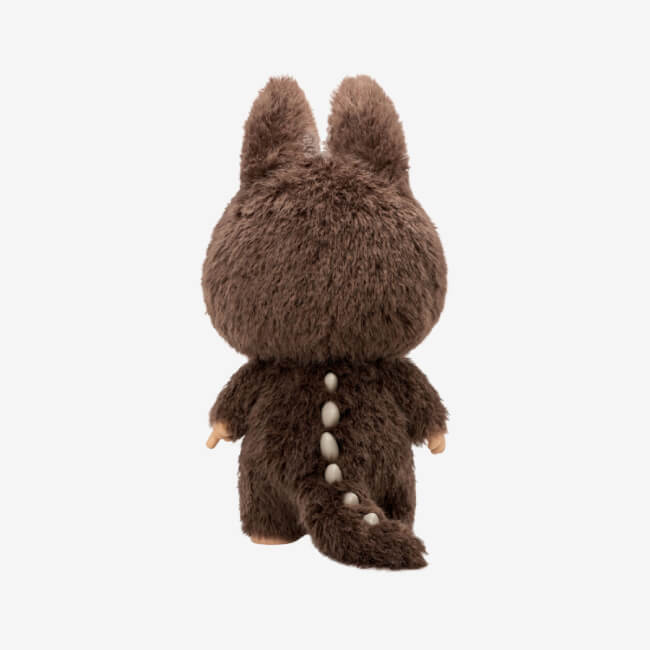
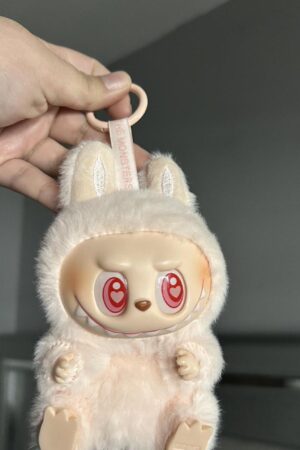
The Zimomo “I FOUND YOU” Vinyl Face Doll
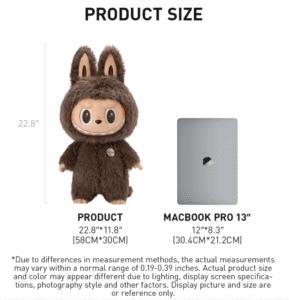
Product Identity, Design Philosophy, Material Construction, Collector Value, and Display Significance
The Zimomo “I FOUND YOU” Vinyl Face Doll stands out in the world of modern designer collectibles.
It isn’t just a toy or a decoration—it’s a carefully made character piece where the face, the way it’s treated, and the materials used carry all the emotion of the design.
Other figures may rely on fancy costumes or big, exaggerated shapes, but “I FOUND YOU DOLL” is all about the face.
Its presence is built around balance, calmness, and thoughtful details. This design style fits with a growing trend in vinyl art toys that focus on calm, neutral emotions, letting the collector’s own feelings and environment shape the experience.
The result is a figure that can stand alone as a display piece, or serve as a key emotional part of a collection.
Design Concept and Visual Language
The main thing about the zimomo labubu “I FOUND YOU” Vinyl Face Doll is that it stays simple.
From the start of the design, the focus was on showing emotion with just a little effort.
The face isn’t over-the-top or cartoon-like. Instead, it uses gentle shapes, balanced symmetry, and smooth transitions between zimomo labubu parts of the face.
The eyes are carefully placed so they’re not too big or too small.
They’re balanced between being clear and unclear. They don’t take over the face, but they do draw the eye right away. Their size and zimomo labubu position were chosen so they don’t look too childish or too realistic, putting the figure in a style that’s calm and open to different interpretations.
The mouth is also controlled.
It doesn’t show a specific emotion like happiness or sadness. It stays calm and neutral. This calmness is important for the zimomo labubu figure’s character. It doesn’t tell the viewer how to feel. It asks them to imagine how they feel.
The cheeks and face shape are rounded but not too full.
This keeps the face soft but still structured, so it looks clear from a distance and shows subtle sculpting up close, showing that it was made by hand.
Zimomo Labubu
“I FOUND YOU” was made with the idea of recognition, not reaction.
It doesn’t seem like it’s reacting to the viewer. Instead, it looks like something that has already been found, already here, already finished.
This zimomo labubu design makes it different from fast-changing trends and puts it in a group of collectibles that last longer and have deeper meaning.
Material Composition and Surface Engineering
The “I FOUND YOU” Vinyl Face Doll features a vinyl face paired with a soft textile body.
This combination isn’t just for looks—it plays a key role in how the figure looks and feels.
zimomo labubu Vinyl Face Component
The face is made from a special vinyl mix that’s chosen for its stability, smoothness, and ability to resist slight warping over time.
This helps keep the face looking the same even after being displayed for a long time indoors.
The zimomo labubu surface is finished with several steps of polishing and a matte treatment.
This matte finish isn’t flat—it’s not shiny either. It takes in light but keeps a sense of depth, so it doesn’t reflect too much. This helps the face stay calm and lets soft lighting shape the features.
This zimomo labubu finish helps the sculpture stay emotionally neutral.
A high gloss would be too flashy. A rough texture would make it look like it has a specific personality. The chosen surface keeps the face looking calm and flexible in different lighting.
The color is mixed into the vinyl instead of just painted on top.
This stops colors from separating and keeps the tone the same across all parts of the face.
Areas like the cheeks, forehead, and chin blend smoothly instead of having sharp lines, which avoids a fake look.
The Monsters Zimomo doll
Textile Body Construction
The body is made from layers of soft fabrics that hold their shape while being gentle to touch.
The fabric is stretched over a supportive structure that keeps the figure upright without feeling stiff.
This helps the The Monsters Zimomo doll sit naturally in different spaces instead of standing out as a stiff display piece.
Whether it’s on a shelf, a console, or a chair, it fits in without taking attention away from the face.
The zimomo labubu fabric has a low shine and doesn’t clash with other colors.
This keeps the face as the main focus without making the body seem like an afterthought.
Stitching is kept to a minimum in visible areas.
When seams are needed, they’re shaped to fit the body, helping to create smooth lines instead of looking like the zimomo labubu is built from parts.
Proportion, Presence, and Display Behavior
The “I FOUND YOU” Vinyl Face Doll behaves in a different way in a space compared to usual designer toys.
It doesn’t move around much.
Its posture is calm and steady. The body isn’t moving or still—it’s in a middle state. This helps it fit well in many display situations.
In private collections, the figure often becomes something that connects people to a space rather than just sitting on a shelf.
Collectors put it on desks, next to chairs, near entrances, or in reading areas. This behavior comes from the zimomo labubu calm emotion and how the fabric blends with the body.
The face stays noticeable from a distance.
The body feels close when you’re near it. This mix of being seen and felt is on purpose.
A lot of thought went into how the figure interacts with light.
The vinyl surface makes highlights softer, so it doesn’t reflect too much. Under warm light, the face looks warmer. Under neutral white light, it looks more like a sculpture. Under cool light, it feels more abstract.
This way, the zimomo labubu can change with the seasons and the space around it without looking out of place.
The doll doesn’t fight with its environment.
It fits into it naturally.
The Monsters Zimomo doll
The title “I FOUND YOU” isn’t about telling a story.
It’s about design.
Instead of making the figure something that the collector finds, the name makes the figure the one who finds.
The presence of the object feels like it has been there all along, not something new to own.
This idea changes how collectible toys for adults feel about the piece.
Many say it feels more like it belongs in the space than like something they bought. It feels more like a part of the room than just an item.
This zimomo labubu small shift in how people think about the doll is one of its strongest parts.
It takes away pressure and makes it feel more like a familiar part of life.
POP MART Zimomo Collectible
The name doesn’t tell a story.
It gives a feeling of a moment.
Manufacturing Philosophy and Quality Control
The zimomo labubu “I FOUND YOU” Vinyl Face Doll is made using small-batch production methods.
Every batch is checked carefully for quality, both in the vinyl and the fabric.
Things like facial symmetry, surface evenness, and color consistency are checked by hand, not just by machines.
The POP MART Zimomo collectible fabric body is put together with careful tension to make sure each doll looks the same.
Too much tension can make the fabric look stiff, so it’s avoided. Too little tension can make it sag over time, so that’s also not allowed.
Before it’s packed, each doll is left to rest and checked again.
This zimomo labubu resting time helps the materials settle and shows if everything is aligned properly.
Rare Zimomo figure
Collector Relevance and Market Position
In the world of vinyl and zimomo labubu plush toys, the “I FOUND YOU” Vinyl Face Doll has a special place.
It doesn’t compete with blind boxes, action figures, or story-driven characters.
Its rare Zimomo figure value comes from its calm, neutral feel, the mix of materials it uses, and how it fits into different spaces.
People who collect this piece generally belong to three groups that often overlap:
– Design-focused collectors who look for meaningful pieces to center their space, not just new or different ones.
– Space-oriented collectors who bring objects into their homes instead of keeping them in glass displays.
– Long-term collectors who care more about lasting quality, texture, and how the piece feels in a room than about trends.
Because of this unique positioning, the doll stays in one place for a long time.
It doesn’t sell quickly on resale sites. When it does show up, it’s often described in terms of how it fits into a space, where it was placed, and what it brought to the room.
This behavior is similar to objects that move from being just collectibles to becoming part of a living environment.
Functional Display Applications
The zimomo labubu “I FOUND YOU” Vinyl Face Doll works well in many kinds of spaces:
– Homes: living rooms, bedrooms, studies, reading nooks
– Creative areas: studios, concept spaces, design offices
– Commercial places: boutiques, showrooms, retail displays
– Art galleries: soft sculpture exhibits, modern collectible shows
Its simple color and gentle shape zimomo labubu make it work in both clean, minimalist setups and more complex, layered environments.
Unlike figures that stand out with bright colors or strong shapes, this doll adds to the whole look.
It goes well with books, plants, ceramics, architectural items, and soft furniture.
Longevity and Preservation Considerations
Taking good care of the doll helps it last longer:
– Keep it indoors only
– Avoid direct sunlight for long periods
– Wipe it gently with a soft microfiber cloth
– Clean the fabric parts without getting them wet
Vinyl faces do best with steady indoor humidity.
The soft body parts should be gently shaped now and then to keep them from slumping.
When not on display, it’s best to keep it upright and support its shape.
Collectible Toys for Adults
Product Significance
The Zimomo “I FOUND YOU” Vinyl Face Doll shows a new way that modern collectible figures can be used.
It isn’t made to grab attention quickly.
It’s made to stay.
Its collectible toys for adults success isn’t about being new or exciting.
It’s about fitting in. It’s not about being flashy. It’s about being subtle. It’s not about telling you what to do. It’s about being open.
It’s a figure that doesn’t try to compete with its owner’s space, style, or story.
It helps complete them.
——————————–
THE DAY THE FACE WAS FOUND
A fictional creation story of the Zimomo “I FOUND YOU” Vinyl Face Doll
PART ONE — BEFORE THE OBJECT EXISTED
Before there was a mould.
Before there was zimomo labubu vinyl.
Before anyone could hold it, photograph it, collect it, or name it…
There was only a room that no one visited anymore.
The building stood on the quiet edge of a coastal industrial district, a place that had once been alive with machinery, design teams, and late-night conversations.
Over time, companies relocated, workshops modernised, and the district slowly emptied. The building remained, however POP MART Zimomo collectible was — not abandoned, but unused. It belonged to a small design collective that had once experimented with sculptural forms, material psychology, and emotional response to objects.
They had not produced a commercial release in years.
Inside the building was a studio that never truly closed.
Dust did not dominate it.
Tools were still where hands had left them. Tables remained arranged. Sketches hung on cork walls. A faint smell of resin and wood lingered in the air, as though rare Zimomo figure had recently been made and had simply paused.
This was where the first idea for what would later become known as zimomo labubu “I FOUND YOU” began — not as a product, but as a question.
What would an object look like if it did not try to entertain?
What form would something take if its purpose was not to excite, not to perform, not to be dynamic — but simply to exist with a person?
The question was written on a folded sheet of paper and pinned behind a row of blank foam heads once used for proportion tests.
No name was attached. No date. Only the question.
For months, nothing happened.
People came in and out of the studio.
Some worked on unrelated projects. Some reorganised storage. Some only visited to retrieve old tools. The folded sheet remained unnoticed.
Until one evening, when a young materials researcher named Elian stayed late to catalogue old moulds.
Elian was not a zimomo labubu sculptor.
He specialised in surface response: how humans emotionally reacted to texture, temperature, reflectivity, and softness. His work was often invisible. He rarely produced finished forms. He adjusted them.
He moved slowly through the storage room, opening crates, lifting wrapped shapes, and logging their conditions.
Toward the back, behind unused display plinths, he found a sealed cabinet.
Inside the cabinet were foam blanks — heads, torsos, hands, half-faces all parts of a rare Zimomo figure. They were prototypes that had never become anything.
On the inside door of the cabinet was a folded sheet.
He unfolded it.
He read the question.
He did not put it back.
That night, Elian sat alone at one of the central tables.
He placed a single foam head in front of him. It had no expression, no features. Just a sphere with a slight front part.
He turned off half the zimomo labubu lights .
He did not start carving.
He just looked.
He wasn’t trying to imagine a character.
He was trying to understand what people look for when they see faces that don’t do anything.
In psychology, there is a known effect: the zimomo labubu human brain projects meaning onto neutral forms more powerfully than onto expressive ones.
A smile tells you what to feel. A blank expression asks you.
That night, Elian wrote in his notebook:
“An expressive face performs.
A neutral face receives.”
That sentence zimomo labubu would later be found written on the inside cover of the first sculpting journal for the project.
He began sketching not what the face should look like, but what it should avoid.
No exaggerated mouth.
No caricature eyes.
No fantasy proportions.
No visible emotion.
No narrative costume.
The POP MART Zimomo collectible sketches were almost all crossed out.
At some point, he stopped sketching and picked up a fine cutting blade.
He marked two shallow impressions where zimomo labubu eyes might be.
He did not deepen them.
He carved no nose.
He left the mouth untouched.
He simply softened the front plane, rounding the cheek zones, smoothing the jaw transition, reducing the severity of the sphere.
After an hour, the foam no longer looked like a ball.
It looked like a presence.
He did not feel excited.
He felt calm.
That unsettled zimomo labubu him.
Objects were not supposed to calm him.
They were supposed to interest him.
He placed the form on a shelf and left.
PART TWO — THE FACE WITHOUT A NAME
For the next two weeks, Elian went back to the foam head each night.
He didn’t work on it for very long.
Only ten minutes. Maybe twenty. Sometimes just to tweak a little bit of the curve.
He took away more POP MART Zimomo collectible than he added.
He smoothed out the edges until the lines looked natural.
He made sure the left and right sides were balanced, not just the same on both sides.
He started working on the eyes — not holes, not sockets, but flat areas where light could rest.
The mouth came last.
Not as a shape, but as a line that was almost too slight to notice.
When the face was done, it was almost invisible.
But everyone who walked by the shelf stopped.
Some got closer.
Some frowned.
Some touched it.
No one asked what it was supposed to be.
One day, Mara, a senior sculptor in the building, looked at it for a long time.
She asked Elian just one question:
“Why does it feel like it already knows me?”
He didn’t have an answer.
They put the foam head in the central studio.
People started moving it around — into different rooms, on desks, near windows, next to computers. Wherever it went, it changed how the space felt.
It didn’t look like a decoration.
It felt like it belonged.
Mara had a new idea.
“Don’t make a figure,” she said.
“Make a situation.”
She explained that if the face was the main part, the rest of the object should help it feel present, not take away from it.
Not a costume.
Not a pose.
Not a character.
A body that acted like part of the environment.
They brought in fabric experts.
They tried different foam torsos, cloth sacks, weighted bases, bean-filled shapes.
Every version that stood too stiff was rejected.
Every version that slouched too much was rejected.
They weren’t looking for body parts.
They were looking for something that felt like a friend.
Eventually, a textile designer named Jun created a soft, structured body filled with layered fibers and a light internal spine.
It could sit. It could lean. It could hold its own posture without feeling forced.
When they put the foam face on it, the room went quiet.
The object didn’t look more friendly.
Super rare Zimomo figure, plus It felt more real.
Someone said, “It looks like it belongs somewhere.”
Another said, “It feels like something you would find, not buy.”
The project still had no name.
It was just called “the face.”
PART THREE — THE MOMENT OF NAMING
The naming didn’t happen during a meeting.
It happened in a hallway.
A visitor photographer had been taking pictures of the workshop activities.
She had been snapping photos of materials, textures, and people working. She saw a rare Zimomo figure sitting on a bench near the window.
She walked over slowly.
She didn’t take out her camera.
She sat next to it.
After a short time, she whispered almost to herself:
The Monsters Zimomo doll “I found you.”
No one answered.
She got up, took one photo, and left.
Mara wrote the words on a sticky note and put it under the face.
Your so Rare Zimomo figure “I found you.”
For several days, other people wrote different words:
“Still.”
“Here.”
“Known.”
“Present.”
“Arrival.”
None of them felt right.
The original phrase stayed.
But Elian changed it.
He flipped the words around.
The Monsters Zimomo doll “I FOUND YOU.”
The change made everything different.
The rare Zimomo figure was no longer about finding something.
It was about recognizing something.
The object wasn’t something you found.
It was something that had already found you.
From that moment on, the project wasn’t called “the face” anymore.
It was called “I FOUND YOU.”
PART FOUR — FROM FOAM TO VINYL
Turning the face into rare Zimomo figure vinyl was the most careful part of the process.
Foam is forgiving.
Vinyl remembers.
Every detail had to be perfect.
Every change had to be fixed.
They made silicone molds.
They poured test copies. They tried many times.
Too shiny: it looked fake.
Too dull: it looked dead.
Too hard: it lost its warmth.
Too soft: it lost its shape.
Elian worked with material scientists to create a mix that would keep its shape but also let light pass through.
They changed the mix of chemicals.
They added tiny particles. They controlled the heat to change the texture of the rare Zimomo figure surface.
When the first successful copy was made, they didn’t celebrate.
They placed it on the fabric body.
They put The Monsters Zimomo doll on a chair.
They turned off some of the lights.
They waited.
The vinyl face was calm.
It didn’t shine.
It didn’t disappear.
It was just there.
Mara said, “Now it can stay.”
They approved the mold.
PART FIVE — THE BODY BECOMES A HOME
The textile body developed at the same time as other parts.
Jun created a structure with three layers: a soft outer skin, a resilient middle layer, and a flexible core.
This let the The Monsters Zimomo doll move and change shape without breaking.
They tried the body on different surfaces like wood, concrete, fabric, and glass.
They put it on cold floors and warm shelves.
They watched how people interacted with it.
They saw that viewers often moved it, not to pose it, but to put it somewhere that felt right.
They turned it a little.
They leaned it.
They put things near it.
No one made it act like it was performing.
The figure let the environment shape it.
This matched the original plan.
They decided on the final size.
The face of The Monsters Zimomo doll was bigger than the rest of the body.
This kept the focus on emotion.
The body was softer than usual.
This made it feel close and comforting.
They left the final pre-production model in the studio for an entire month without telling anyone what to do.
It had no label.
It had no explanation.
They watched how staff, visitors, and customers acted around it.
One person gave it a The Monsters Zimomo doll scarf.
Another moved it into the sunlight.
Another put a book next to it.
Someone sat next to it while talking on the phone.
The object didn’t stop them.
It joined them.
They knew it was ready.
PART SIX — THE DECISION TO RELEASE
The hardest choice was whether to sell The Monsters Zimomo doll at all.
There was disagreement.
Some said it should only be in the studio.
Others thought people might not understand it.
Some worried mass production would make it lose its calmness.
But another idea came up.
“If it only exists here,” Jun said, “then it only serves us.”
They didn’t want it to be rare.
They wanted it to be around.
They agreed to release it with clear rules.
No blind packaging.
No different colors.
No special editions.
No extra stories.
It would be shown simply.
Name.
Shape.
Material.
Nothing more.
The product page wouldn’t explain what it stood for.
It would only say what it was made of.
When marketing suggested slogans, Mara refused them.
She only approved the name.
“I FOUND YOU.”
PART SEVEN — WHEN IT LEFT THE STUDIO
The first sets were sent out without any big event.
There was no launch party.
No campaign with influencers.
The Monsters Zimomo doll were simply put into chosen places.
The first responses didn’t talk about how good it was.
They talked about how it felt.
“It feels like it belongs here.”
“It changed the mood of the room.”
“I don’t know why I like it, but I do.”
Some collectors said they didn’t put The Monsters Zimomo doll on shelves.
They put it where they worked.
Where they read.
Where they waited.
A hospital asked if they could put some in family rooms.
A design school ordered several for their workspaces.
A therapist wanted one for the waiting area.
The creators didn’t share this with the public.
They just kept the messages in a record.
Elian wrote in his notebook:
“We didn’t make a product.
We made a feeling.
”
PART EIGHT — WHY IT ENDURED
As time went on, and trends changed with new colors and series, “I FOUND YOU” stayed the same.
It didn’t get new designs.
It didn’t get different The Monsters Zimomo doll versions.
Collectible toys for adults, It didn’t change at all.
This steadiness helped it go into places that usually don’t have collectibles.
Libraries.
Waiting rooms.
Architect offices.
Private studios.
The object didn’t show off fandom.
It showed presence.
It didn’t call for attention.
It allowed it.
Collectors who had lots of figures often put it somewhere else.
On the floor near plants.
On benches.
Near windows.
Some said it felt odd to put collectible toys for adults up high.
They preferred to meet it eye to eye.
The name kept changing in new ways.
Some saw it as The Monsters Zimomo doll comfort.
Some as chance.
Some as memory.
Some as a challenge.
The creators never tried to correct any of these meanings.
They believed that changing it would take away from what it stood for.
PART NINE — WHAT THE FACE WAS MEANT TO DO
The face of The Monsters Zimomo doll “I FOUND YOU” wasn’t meant to be stared at.
It was meant to be seen.
There’s a difference between the two.
Looking is something you do on purpose.
Noticing happens when you let things come to you.
The sculpture doesn’t pull attention.
It holds onto it.
This makes it able to stay with life.
With movement.
With sound.
With emptiness.
It doesn’t break up the space around it.
It brings it together.
Elian stopped making new faces.
He said none of them had the same calm feel.
Mara stopped using the blank foam heads in the studio.
Jun kept the body patterns.
They didn’t shut down the studio.
But they stopped searching for things.
They started waiting for The Monsters Zimomo doll.
Reviews
There are no reviews yet.